

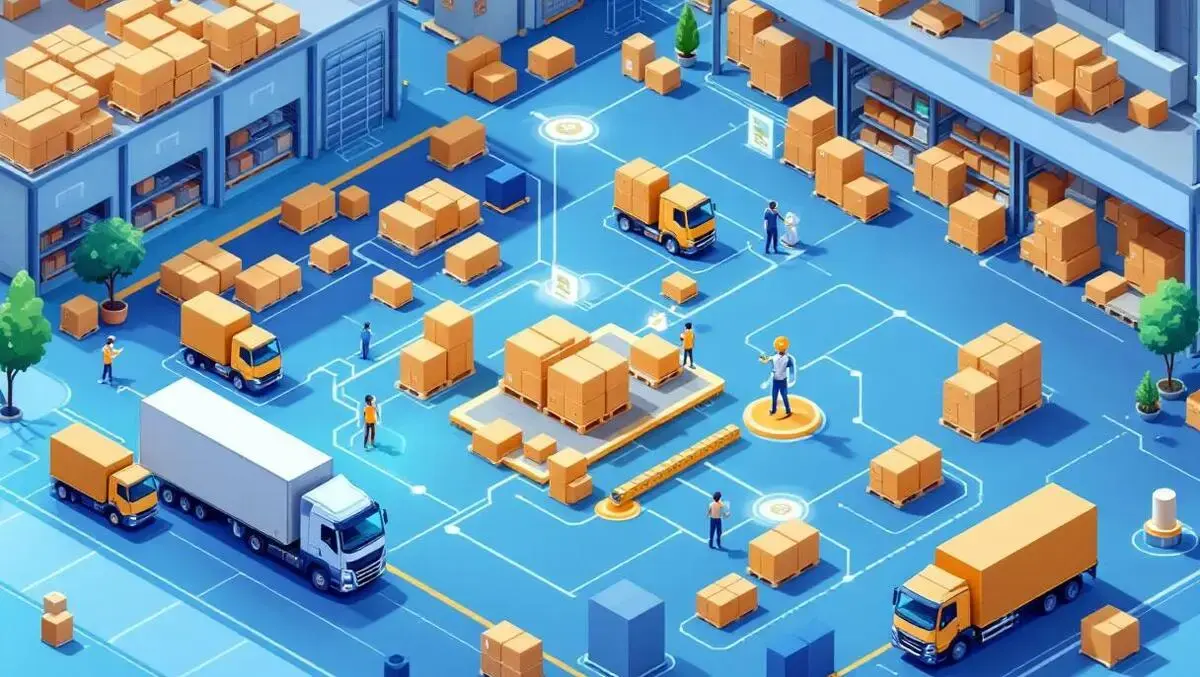
Infios launches AI agents for supply chain workflows
Fri, 1st May 2026
Infios has launched a suite of AI agents for supply chain workflows, designed to operate across orders, warehousing and transportation.
The agents work inside live execution systems and can trigger automated responses as conditions change.
The software targets supply chain operations facing persistent disruption. Rather than sitting alongside existing systems, the tools are intended to coordinate actions across fulfilment and logistics.
The release includes several categories of agent. Transportation Agents automate execution workflows, including driver check calls through AI voice systems triggered by defined conditions. Order and Document Agents capture, translate and validate unstructured documents such as orders and bills of lading, then convert them into structured data inside live execution systems.
Warehouse Agents are intended to support supervisors and operators by automating inventory research, issue resolution and labour coaching based on worker performance and company procedures. Optimization Agents are designed to select routes for loads or fulfilment options, then adjust those decisions in real time as conditions change.
One example describes a carrier delay affecting picking and order commitments. In that situation, Optimization Agents assess inventory, capacity and routing across systems, then reassign, reprioritise and re-tender loads in minutes without manual intervention.
Customer results
Infios cited early customer outcomes from the new AI tools across several operational settings. These included order release times cut from hours to minutes at a global apparel company, a 70% reduction in backorders in production environments for a US online retailer, and automated order entry reaching an 83% autonomy rate for a logistics service provider.
It also said disruption detection and recovery had been reduced from days to minutes across its customer base using the technology.
Ed Auriemma, Chief Executive Officer of Infios, linked the launch to wider strain on logistics and fulfilment systems.
“Disruption is constant, and it's expensive. This isn't a cycle. It's the new baseline, and legacy systems just can't keep up,” said Auriemma.
“Supply chains don't need faster reactions. They need a system that takes action, moving from manual intervention to automated action to execute without interruption,” he said.
Inside workflows
A central part of the launch is Infios's argument that AI should operate within transactional and operational workflows rather than as a separate analytical layer. Under that model, a decision in one domain can trigger coordinated action in others, such as transport changes affecting warehouse activity or order handling.
The business outlined what it described as a staged approach to automation. Customers begin with assisted recommendations, move to automated execution within defined policies, and then progress to autonomous end-to-end operational decisions within guardrails set by the customer.
The approach appears intended to address concerns about handing control of time-sensitive logistics tasks to software from the outset. Teams can begin with a single workflow, such as delayed shipments or order changes, before extending use into other areas.
Eugene Amigud, Chief Innovation Officer of Infios, said the distinction lies in where the software is deployed.
“What makes Infios AI agents different is that they operate inside real workflows where decisions and actions happen every minute,” said Amigud.
“By embedding AI directly into execution, when something changes, orders update, warehouse work shifts, and shipments are rebooked in real time. That's how AI moves beyond experimentation and starts driving real business outcomes,” he said.
Infios serves more than 5,000 customers across 70 countries and is a joint venture between Körber and KKR.