

Siu says AI agents & blockchain will reshape internet
Tue, 31st Mar 2026
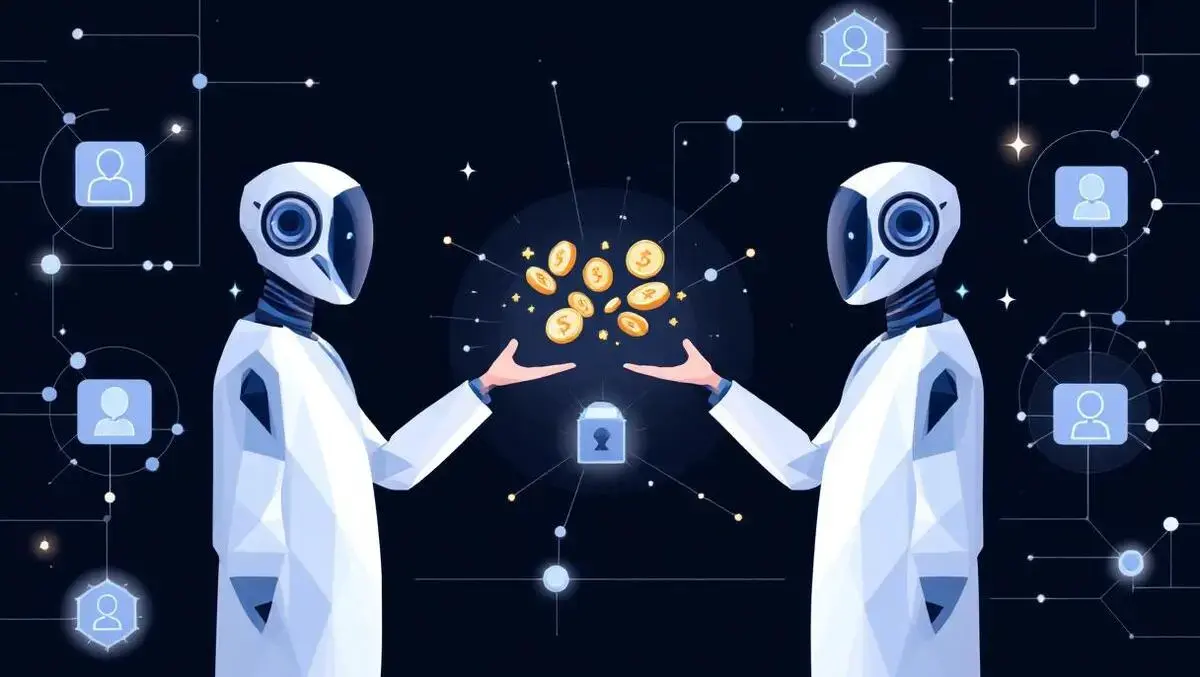
Animoca Brands co-founder and executive chairman Yat Siu has published an essay arguing that autonomous AI agents will become the internet's main actors, with blockchain providing the ownership and payment rails they need.
He describes an internet shifting away from interfaces built mainly for humans and toward software entities that can search, negotiate, transact and coordinate on people's behalf. In his view, that shift will change product design, online business models and the mix of roles companies need to fill.
Shift in design
At the centre of the argument is a move from user experience, or UX, to what Siu calls agent experience, or AX. He argues that products will increasingly need to be readable and actionable for autonomous systems, rather than designed only around screens, feeds and notifications for people.
That means software teams will need to focus more on APIs, permissions, memory, trust, provenance and execution environments. Human interfaces will still matter, but they will sit alongside delegation systems that let agents act within defined limits.
He also argues that AI agents will reverse the attention model that has dominated much of the consumer internet. Instead of platforms pushing constant alerts, messages and adverts at users, agents would pull relevant information from networks, filter out noise and act when needed.
Email and messaging would remain, but their role would change as software agents read, sort and turn communications into actions or workflows. In that model, people spend less time on routine digital administration and more on judgment, strategy and creative work.
Many agents
Another theme in the essay is that a single all-purpose assistant is unlikely to be enough. Siu says specialist agents will be better suited to complex work, with different systems handling planning, retrieval, compliance, execution or negotiation.
He describes persistent agents as especially important for long-running tasks that require memory and context across multiple interactions. Once several of those agents work together, organisations will need standards for routing, accountability, memory synchronisation and conflict resolution.
To illustrate the shift, he points to emerging protocols for agent-to-agent communication, including MCP, A2A, ACP and ANP. In his view, those standards amount to a common language for software entities that must discover one another, coordinate work and exchange intent across platforms.
Blockchain layer
A major part of Siu's case is that agents will need more than technical access to apps and data. If they are to pay for compute, buy data, compensate other agents or manage capital, they must also be able to hold and move value without constant human approval.
That is where blockchain fits into his analysis. He argues that wallets, programmable assets, digital identity, escrow, payment rails, reputation and verifiable transaction histories make blockchain a practical economic layer for agent-led commerce.
Tokens, he says, can represent payment, access, permissions, reputation and governance rights, allowing agents to take part in economic activity directly. That would turn them from software tools into market participants able to settle transactions on-chain.
Siu cites examples such as agents trading crypto on Hyperliquid and buying and selling NFTs on OpenSea. He also points to areas including DeFAI, decentralised resource marketplaces, agentic social networks and systems for coordinating groups of specialist agents.
Several Animoca-linked projects appear in that discussion, including Moca Network and Animoca Minds. He describes Moca Network as an identity and reputation layer, and Animoca Minds as a tool for deploying networked agents without technical setup.
Workplace impact
The essay also sets out a view of the labour market. Siu compares the rise of agent-focused work to earlier technology shifts that produced roles such as web developers, community managers, DevOps engineers and site reliability engineers.
He suggests companies will increasingly need roles such as Agentic AI Designer, Agentic AI Engineer, Agent Orchestrator, Agent Economist and Agent Governor. In his view, those jobs reflect the technical and organisational demands of systems in which autonomous agents act on people's behalf and hold economic rights.
His argument also extends to digital advertising and platform economics. If agents screen information for users and ignore conventional adverts, the current ad-supported model will come under pressure because marketers will have to persuade agents, not just people, that an offer is relevant.
That would change the consumer's position in online markets. Rather than being treated mainly as sources of attention and data, users would act as principals whose agents manage what Siu calls their attention assets in search of better outcomes.
"I firmly believe that the future of the internet is not just artificial intelligence, but agentic intelligence with economic sovereignty. The people and organizations that understand how to hire, design, build, and govern for this new paradigm-technologically, culturally, and economically-are likely to be the ones who define the next decade," Siu said.