

Tariffs, AI, new trade routes reshape supply chains
Thu, 26th Feb 2026%201.webp)
Citi has published a new report on supply chain finance, arguing that global trade is being reshaped by tariff volatility, wider adoption of artificial intelligence, and a shift toward multipolar, more regional supply chains.
Part of Citi's Global Perspectives & Solutions series, the report looks at how companies are changing procurement, manufacturing footprints, and financing structures as trade patterns adjust. It also examines the role of technology in trade finance operations and the implications for working capital management.
Citi's analysis suggests businesses have adapted quickly to policy changes, prioritising diversification and cash management. Firms have absorbed higher tariff costs through inventory decisions and supplier changes, while keeping supply chain disruption contained.
Tariffs and pressure
The report draws on Citi's Global Supply Chain Pressure Index, payment flows from its Services business, and survey responses from large multinationals and small and medium-sized enterprises. Citi's Services business processes more than $5 trillion in payment flows each day.
Citi estimates US tariffs have risen to about 16.8%, from 2.4% before a change in administration. Despite the increase, the index shows supply chain pressures remain subdued and near pre-pandemic levels.
The findings suggest companies managed the early impact of tariff changes through inventory management, supplier diversification, and nearshoring. The report frames these steps as part of a broader shift in which resilience comes from spreading sourcing and production across multiple locations.
Trade patterns shift
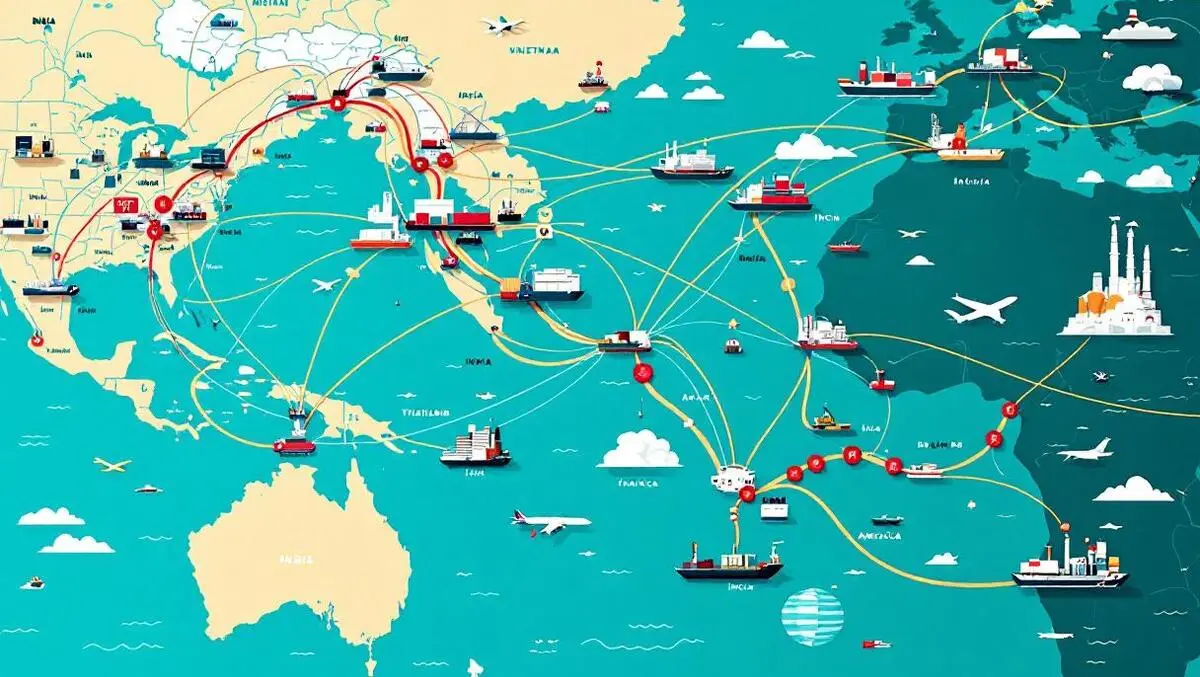
Citi's breakdown of goods flows points to a reorganisation of trade links across Asia and the Americas. South Asia and ASEAN are gaining share in shipments from North and East Asia, up 44%.
Latin America also features prominently. The region is becoming more integrated into supply chains linked to both Asia and North America. Exports from Latin America to South Asia and ASEAN rose 82%, the report's largest increase globally.
In the United States, import diversification appears to be accelerating. Shipments from South Asia and ASEAN increased 50%, while shipments from Latin America rose 43%. Both outpaced the 32% growth in shipments from North and East Asia.
The data support the view that companies are building multiple sourcing corridors rather than swapping one dominant route for another. It also suggests the Americas and parts of Asia are strengthening cross-regional links even as more production moves closer to end markets.
AI in trade finance
The report argues that technology is reshaping trade finance processes, with a focus on automation and digital settlement. It points to AI use in document handling and pilot work involving blockchain-based conditional trade payments.
"Technology is fundamentally reengineering how trade finance operates. AI-powered intelligent document processing enables exceptionally high accuracy rates and reduc[es] processing to just minutes. Through a pilot of blockchain-based conditional trade payments, we have seen the potential for an evolution from standard paper-based guarantees to near 24/7 digital execution and automated settlement," said Adoniro Cestari, Citi's Global Head of Trade and Working Capital.
Beyond operational change, the report links trade finance to the build-out of AI infrastructure. It describes AI data centre investment as a major driver of cross-border demand for equipment, components, and services, with knock-on effects for supplier and buyer financing structures.
Citi Research estimates $7.75 trillion in global AI-related capital expenditure by 2030. The report says the scale and complexity of AI data centre development is increasing demand for solutions such as supply chain finance and structured receivables programmes.
The report also points to a sharp increase in AI adoption within trade finance: 36% of large corporates now use AI tools, up 18% from the previous year.
"These types of innovations, combined with structuring expertise, help companies unlock trapped liquidity and optimise working capital while supporting more efficient supply chains and the massive AI infrastructure buildout underway globally," Cestari said.
Working capital focus
The report puts working capital management at the centre of corporate decision-making. It finds that 64% of companies cite rising input costs as their primary concern, reflecting pressure across procurement and production budgets.
Citi estimates that, on average, 6.3% of working capital is now tied up in funding tariff costs. The report outlines responses including inventory finance, structured receivables programmes, and dynamic discounting, which can free liquidity tied up in stock, invoices, and payment terms.
A Citi survey of 710 large corporations found that 65% are actively diversifying supply chains away from one or more countries. The report lists Vietnam, Thailand, India, and Mexico as preferred destinations, reflecting both shifts in Asian manufacturing and the pull of nearshoring into North America.
The report argues these changes are likely to persist as firms weigh tariff risk, geopolitical uncertainty, and the pace of AI-driven investment, with supply chain finance remaining central to cash conversion and supplier relationships.