Critical Infrastructure stories
The approval widens Gallagher Security's access-control options for government, defence and utilities customers needing NPSA-recognised hardware.
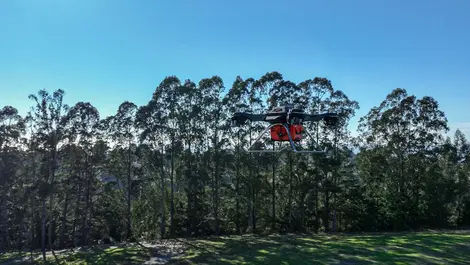
The partnership gives Australian operators local access to a hybrid heavy-lift drone suited to mining, maritime and bushfire work across the region.
Rising attacks on connected factories are pushing regulators to require proof of security from shipment through service, Rockwell says.
Technicians are losing up to two hours a day to admin, squeezing capacity and worsening delays as labour shortages bite across essential industries.
Demand for faster target recognition is pushing Australian uncrewed systems firms to combine sensors and autonomous platforms across the Asia-Pacific region.
Boards are being pushed to set clear controls as AI decisions spread beyond cyber teams and into daily work, raising governance and outage risks.
Only 5% of Australian companies are ready for AI-driven attacks, leaving most exposed as threat actors move at machine speed.
Regulated firms can now track shadow AI as RSA says Agent ID will help banks and public bodies assign owners and approvals to agents.
The site will add about 22,000 square metres and create hundreds of jobs as demand rises for AI cooling and power gear across EMEA.
Only 7% of organisations have deployed quantum-safe or hybrid cryptography, leaving many exposed as post-quantum migration moves into execution.
Australian organisations are paying millions more when breaches linger, making delayed cyber investment a boardroom problem rather than a technical one.
Phishing now accounts for nearly a quarter of observed intrusions, while Australia slipped to 11th in Microsoft's latest global cyber rankings.
The first settlement cycle in the new environment processed nearly 2 million FX trades worth more than USD $9 trillion, testing its resilience.
A mix of local and global systems could shield New Zealand services from cyberattacks and natural hazards while preserving control over critical data.
Outdated software left internet-linked devices exposed, with supermarkets warned the same flaw could disrupt everyday shopping in New Zealand.
The British firm will soon double its collection capacity, letting customers track assets and infrastructure worldwide day and night.
The pact gives public institutions and critical infrastructure operators in Côte d'Ivoire access to locally run security operations as cyber risk rises.
Australian operators faced the highest alert volumes per organisation as attackers increasingly targeted connected industrial systems and critical infrastructure.
Verified supplier checks could help governments cut breach risks and avoid service disruptions as agencies rely on thousands of contractors.
The move is aimed at helping Italian startups win customers across Singapore and Southeast Asia as cyber threats escalate in the region.