Liquid cooling stories
The 1GW project could create thousands of jobs and cement Hyderabad's pitch as a hub for AI infrastructure and hyperscale computing.
Vacancy is tightening as cloud and artificial intelligence demand drives a projected USD $110 billion build-out across India by 2029.
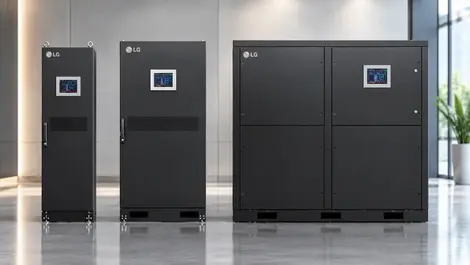
As AI racks draw more power, data centre operators are shifting to liquid cooling, and LG's latest unit now meets NVIDIA's reference design requirements.
AI training is exposing network bottlenecks that can idle GPUs, raise costs and force operators to redesign data centres around lossless fabrics.
Data centre operators can now mix air and liquid cooling in one unit as AI workloads push rack densities higher across facilities.
Utilities and cloud operators could squeeze more AI work from fixed power budgets as Nvidia's DSX software lifts throughput and cuts demand.
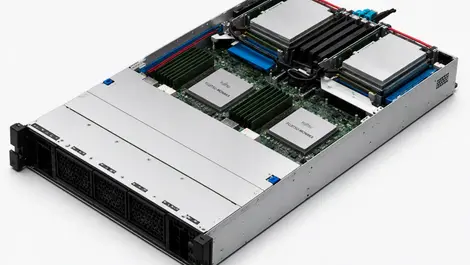
Data centre operators could cut energy use and rack space as Fujitsu's new 2nm chip targets AI inference with air cooling.
Demand for specialist data centre support is pushing Salute to expand, with the combined group set to manage more than 15GW globally.
Demand for denser AI data centres is driving a new Cisco-Nvidia partnership with Supermicro, aimed at easing cooling and deployment pressures.
Rising cloud and AI demand is set to almost quadruple spending on data centre physical infrastructure to USD $128.27 billion by 2034.
It lets cloud operators pair custom XPUs with NVIDIA's rack-scale systems, aiming to cut delays and integration costs in AI build-outs.
Delivery bottlenecks, rather than demand, are now the main risk as AI-fuelled data centre expansion pushes revenue to USD $120 billion by 2030.
The validation could help data centre operators choose cooler fluids that cut maintenance risk as AI hardware packs more heat into racks.
Pressure is mounting on data centre operators as AI workloads push chip temperatures higher and make liquid cooling more urgent.
Rising AI heat loads are pushing data centres towards liquid cooling, as Echelon and Trinovium begin work on fluids and monitoring.
The combined design could cut installation costs and copper use sharply as operators race to build more efficient AI data centres.
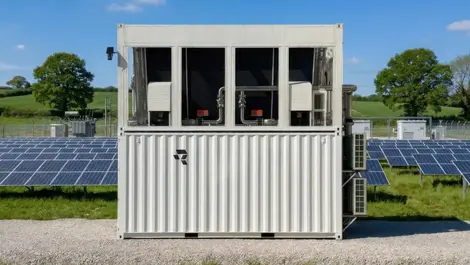
The modular units aim to ease AI compute bottlenecks by bringing 1 megawatt of capacity online in weeks, not years.
The deal extends Vertiv's fluid management services into Europe, the Middle East and Africa as data centre cooling demands grow.
Cooling already accounts for up to 40 per cent of data centre energy use, as AI-driven growth strains UK power and water supplies.
Pressure is mounting on Singapore data centre operators to secure low-carbon power as Equinix adds another solar deal and lifts its local portfolio.